Showing posts with label LEP. Show all posts

26 July 2015

Business University Collaboration - the Yorkshire Innovation Fund


Yesterday the Yorkshire Innovation Fund started to follow me on twitter so I thought that the least I could do was to check it out. It describes itself on its home page as "a way of funding new ideas within your business" and explains:
"Many new ideas require a blend of skills and expertise to get them off the ground and working with a local university can often help by providing access to expertise, specialist equipment or facilities or new talent to develop your idea. YIF funds this access."
In other words, it puts up the money to pay for R & D and other work carried out by one of its partner universities which seem to include most of the universities in Yorkshire with the notable exception of the University of Sheffield.

Available Funding
According to the Is my company in an eligible sector? page of its website
"The Yorkshire Innovation Fund is available to Small and Medium-sized Enterprises (SMEs) in the Yorkshire region from the following areas:
  • Advanced manufacturing, engineering & materials
  • Bio-renewables (feedstocks, raw materials and ingredients)
  • Healthcare technologies
  • Low carbon energy (e.g. wind, nuclear, carbon capture & storage, bio-fuel)
  • Bioscience
  • Creative and digital 
  • Chemicals
  • Financial and business services
  • Food and drink
  • Sport (South Yorkshire SMEs only)"
On the What types of project has YIF supported? page the website mentions small innovation projects up to £10,000, research and development projects up to £31,000 and strategic intervention for which no figure is given. Detailed case studies of projects that the Fund has supported in the past can be downloaded from the Projects YIF has funded page on its website.

Funding for New Projects
This would seem to be a good port of call for many of the entrepreneurs and inventors I have seen in my IP clinics and the Leeds and Sheffield inventors clubs over the years except for this warning that appears on the home page:
"YIF is currently unable to commence any new projects with regional SMEs and is exploring new funding opportunities to support collaborative projects in the future."
We must hope that this is only a temporary hiccup and that the Fund will refill its coffers soon. It must be remembered that this is only one funding option among many and that I discussed some of the other options in Business Funding in Leeds City Region on 1 June 2015.

Issues to consider when Negotiating with a University
If a business does commission a university to do some work for it, its management should give some thought as to
  • the ownership and rights to use the results of the project
  • the financial and other contributions made by the commercial sponsor
  • the university’s use of the results for academic purposes.
It may come as a shock to readers that a not insignificant part of my work as a member of the IP bar is taken up with negotiating those issues with, and occasionally on behalf of, universities and resolving disputes over those issues once the work has been completed.

The Lambert Agreements
At the beginning of the present millennium Mr Gordon Brown who was then the Chancellor of the Exchequer commissioned Sir Richard Lambert (as he now is) to review collaboration between businesses and universities. In his Final Report which was published in December 2003 Sir Richard identified concern over those issues as one of the impediments to such collaboration. To allay those concerns the Chancellor asked Sir Richard to hold further meetings with stakeholders to develop model contracts for such collaboration and I actually participated in one of those sessions, The result has been a number of model agreements which are explained in The Lambert Toolkit. The Intellectual Property Office has helpfully provided a Decision Guide to help negotiators choose the right contract.

Need for Caution
Although it is a lot easier than it was dealings between universities and businesses are still tricky largely because academics and businessmen have different interests and come from different cultures. Universities have become pretty savvy of late and they have access to good and experienced legal and accounting advice. Entrepreneurs are often at a distinct disadvantage (especially in the early days of their business careers) and they need all the professional help they can get.

Should any reader want to discuss this article or requires advice on business-university collaboration or funding in general, he or she should call me on 020 7404 5252 during office hours or contact me through this form.

3 February 2015

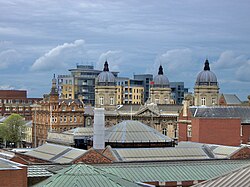
Hull Central Library joins PatLib

Hull
Photo Wikipedia


PatLib is a European network of some 320 patent information centres where members of the public can obtain information about patents and other intellectual property rights. There are 15 of those centres in the United Kingdom including three in Yorkshire. I write about the network in PatLib Libraries in the UK 28 Jan 2015 Inventors Club.

Hull Central Library is the latest to join the PatLib network. Its reference library holds an enormous collection of resources for business in print and on-line including an Enterprise Hub where workshops and seminars take place. The full range of services include:
  • information on Intellectual Property (IP), copies of Intellectual Property Office (IPO) and European Patent Office (EPO) literature
  • enquiry service
  • assisted searching by appointment only
  • fee based document supply
  • referrals to other advice/service providers
  • free public access to internet, IP information resources, business and company databases, market research databases
  • patent clinics offering free appointments with IP advisrrs by appointment
  • workshops and Seminars.
Information on  those services can be obtained from the reference library on (0)14 8222 3344.

These additional services have arrived at an opportune time. In her report for The Business Desk Humber LEP continues to drive growth for region of 30 Jan 2015 Ellie Newton-Syms wrote about the strong recovery of the Humber estuary based largely on investments in the energy industry. With falling oil prices this will be a challenging time even for the renewable sector and businesses will need to be agile to ride the challenge. Having access to the latest technical literature and expert advice has never been more important.

If anyone wants to discuss this article or IP generally call me on 01484 599090 or use my contact form.

29 August 2012

Yorkshire LEPs One Year After the Armouries

James Reed's article "LEPs unite to back energy hub bid" in today's Business Desk prompts a review of the county's local enterprise partnerships one year on from the very successful Local Enterprise Partnership Summit at the Royal Armouries in Leeds on 9 Sep 2011 (see my post "LEP Summit: My Impressions of the Day as a Delegate" 10 Sep 2011). The Summit welcomed representatives from other Northern LEPs and the question of regional co-operation was touched upon although they were more than counterbalanced by inter-regional rivalries.

Reed's article mentions an example of practical regional co-operation.  The four LEP's have joined forces to back 2CO Energy and and the White Rose CCS Project that could make Yorkshire a centre for green energy production. According to Reed, the LEPs are urging the Government to help fund those projects t as a first step to creating a 'cluster' of expertise in carbon capture and storage technology.  Reid continues:
"The demise of regional development agency Yorkshire Forward and the creation of local enterprise partnerships raised concerns that the new bodies would become preoccupied with local concerns and not act together.
That idea has always been rejected by the LEP chairmen and their united support for the region's pioneering CCS projects is the most high profile example of collaboration between the four bodies to date."
Yorkshire and the Humber now have four local enterprise partnerships and three of them have their own websites:

 If anyone wants to discuss this topic with me further, he or she can contact me through my contact form, Facebook, Linkedin, Xing or twitter or call me on 0113 320 3232 .

4 September 2011

News of LEPs in Yorkshire and Humber No. II

I see to my horror that I have not updated this blog since 27 July 2011 though I did publish IP Yorkshire, the Yorkshire and Humber newsletter, on Yorkshire Day which falls on 1 August. A lot has happened since then.

Humber LEP
First a proposal by a consortium of local authorities and local businesses and business organizations for a local enterprise partnership for the Humber has been accepted. You can see the press release on Hull and Humber Chamber of Commerce website. According to its proposal the LEP will:
  • "Co-ordinate public and private sector activity that is targeted at growing our three key growth sectors (renewable energy, ports and logistics, and chemicals), with the aim of developing an international-scale super cluster around the Humber.
  • Lead on 16-19 and adult skills strategy, particularly in relation to the key sectors listed above, to ensure that as many of the jobs created as possible can go to local people, businesses can recruit the workforces they need to expand, the aspirations of young people are raised and graduate retention is improved.
  • Take responsibility for the “Humber brand”, co-ordinating and promoting our offer for international trade and as a location for investment.
  • Lead on international trade issues to help more companies export their goods and services.
  • Lead on co-ordinating and identifying strategic transport and infrastructure priorities that will support economic growth.
  • Co-ordinate activity that supports innovation and enterprise.
  • Bring together partners where appropriate to bid for public and private sector contracts and funding.
  • Submit a bid for an Enterprise Zone in the Humber and explore any other opportunities that arise from new Government policy."
According to Lorna Gibbons, Senior Economic Development Officer at Poole Borough Council who keeps the superb Economic Development blog, the contact for the Humber LEP is Mr. Richard Kendall Tel 01484 324 976 Email r.kendall@hull-humber-chamber.co.uk (see "Everything you need to know about each LEP ..... contact and priorities (where available)"). I have also found a website for the LEP at http://humberlep.org/. Their postal address is 34/38 Beverley Road, Hull, HU3 1YE and their twitter feed is @humberlep.

Enterprise Zones
The last of the bullet points on the Humber LEP's to do list was to submit a bid for an enterprise zone in the Humber and that seems to have been approved within a week of being submitted (see the press release of 17 Aug 2011 on the chamber website and the announcement on the LEP site). The site will cover 375 hectares on 3 sites: Green Port (Alexandra Dock) and Queen Elizabeth Dock in Hull and the Able Marine Energy Park in North Lincolnshire. The sector focus will be on offshore wind OEM and it is hoped to generate 4,850 jobs in the zone by 2015. There will be £7.9 million is business rates savings.

There will also be enterprise zones in Leeds (142 hectares in the Lower Aire Valley) where it is hoped to 4,000 new jobs in low carbon industries and modern manufacturing (see "Leeds Enterprise Zone: Full Details" in Real Business) and Sheffield in the "Modern Manufacturing and Technology Growth Area" where it is hoped to create 12,600 jobs (see "Sheffield Enterprise Zone: Full Details" in Real Business).

For updates see Lorna's post "Enterprise Zones Update" of 15 Aug 2011 and the Communities Department's LEP and enterprise zones map.

Leeds LEP Summit
Leeds LEP will hold a one day summit to shape the Leeds City Region economy at the Royal Armouries on 9 Sept 2011. I have registered the course and will blog about it next week. The programme looks very interesting.

Other Articles

12 April 2011

Sheffield LEP: NAMTEC Questions and Answers

Earlier today I attended a Question and Answer Session on the Sheffield Local Enterprise Partnership at the Rotherham Holiday Inn organized by NAMTEC (the National Metal Technologies Centre). The speakers were LEP Board Members, David Grey, managing director of OSL Group Ltd. and Philip Bartey, Group Chief Executive of the Adsetts Partnership.
I counted 40 names on the delegate list which included representatives from industry, the universities, the law and other professions and local government. Judging by the number of name tags, when I arrived there were very few no shows. The meeting was quite unstructured. Save for a glossy about NAMTEC there were no delegate materials.

As soon as I had settled in I asked the speakers what exactly was the legal status of the Sheffield local enterprise partnership. Unlike the regional development agencies they were not established by statute. Their membership seemed quite fluid in that one local authority, Barnsley, managed to belong to both Leeds and Sheffield City Region LEPs. They apparently needed the approbation of the Department for Business, Innovation and Skills and the Department for the Communities, but why? Why did the LEPs have to be in adjacent authorities. Surely there was more synergy in function and economic interest than geography. The answer that I got was that there really was no formal legal structure. There was no provision for LEPs in the Localism Bill. The board members were unpaid and exceedingly worthy but also unelected. In that regard, I could not help comparing them to the Senate of the Venetian Republic.

The next question concerned the Regional Growth Fund. That elicited the answer that the criteria for awards under the scheme were jobs. Jobs now to soak up public sector redundancies. Not jobs in the future, to quote Lord Heseltine. That seems to be confirmed by the latest press release on the first round of awards.

Someone else asked about enterprise zones. The speakers said that the LEP had been tasked with drawing up criteria for the enterprise zones. David Grey invited our suggestions. A lady behind me suggested start-ups. Grey replied that start-up businesses are the ones most likely to fail. I suggested that Meadowhall which has been built on an old steel mill a few miles away were a good example of what could be done. The speakers' responded that Meadowhall had devastated Sheffield and Rotherham City Centres. I replied that they were missing the point. The idea was to match jobs to skill sets and Meadowhall did that spectacularly well. There was more to the site than retailing. There was demolition, earthworks, construction, distribution, entertainment, culture and leisure. Redundant steel workers were much more likely to find a job in a project like that than a biotech start-up.

Finally there was some discussion on British competitiveness. The speakers said that we Brits excelled in talking ourselves down and we should celebrate our achievements occasionally. I did not contribute to that debate but I couldn't help thinking that complacency was a greater danger than self denigration.

There were a few minutes for networking after the talk when I met patent librarian Lynne Hinchcliff and Joyce Gray from Sheffield City Libraries, Andy Curtis from Global Innovation Partners, Jayne Mezulis from Export & Import Consultancy Services and, of course, the speakers themselves.

21 March 2011

New Local Enterprise Partnership for York and North Yorkshire

I have already written articles for this blog and elsewhere about local enterprise partnerships (see, in particular, "News of Yorkshire LEPs" 12 Jan 2011 and "Leeds LEP Board Members"). By a letter dated 10 Feb 2011 signed by Mark Prisk MP and Greg Clark the Business and Communities Departments approved proposals for a new local enterprise partnership for York and North Yorkshire.

Yorkshire now has three local enterprise partnerships:
There is a measure of overlap between those partnerships. Both Leeds and Sheffield City Regions include Barnsley in their orbits and York is a member of the Leeds City Region and the York and North Yorkshire LEPs. Representatives of all three LEPs attended the so-called "Big Debate on Local Enterprise Partnerships" at Venturefest on the 16 Feb 2011 at which I was present.

The new York and North Yorkshire LEP has announced a number of activities including:
  • investing in rural broadband
  • promoting enterprise and raising expectations
  • supporting food and agriculture
  • supporting tourism and hospitality
  • promoting the care sector
  • investing in York as the economic driver for the region
  • reducing barriers to high growth business
  • delivering rural programmes, and
  • supporting coastal regeneration.
All very worthy though in parts somewhat vague. We shall be following all three Yorkshire LEPs and will report on anything that is likely to be of interest to those investing in new brands, design, technology and the creative industries in Yorkshire and the Humber. Click here or call us on 0113 320 3232 if you want to be kept up to date about business advice, events, funding, professional advisors or news from our region.

12 January 2011

News of Yorkshire LEPs

The previous government established regional development agencies ("RDA") to stimulate economic growth in the regions of England. The regional development agency for Yorkshire and the Humber is Yorkshire Forward. Although the RDA undoubtedly did some good work they did not actually achieve their objective of producing balanced balanced growth throughout the country. As I observed in "Government's Strategy on Growth published at last" (NIPC Inventors Club 30 Oct 2010):
"As most of us are used to a more corporatist model, the government's thinking is hard to follow. Those who want to understand the thinking behind it should read the Department for Business Innovation and Skills economic paper "Understanding Local Growth" also published this month. Without an economics background, this paper is hard going, but the important bit is the table on page 10. That shows that productivity per person has actually fallen during the years in which the RDAs existed in every region except London and the South-East and that growth has been appreciably slower outside those regions. That paper taken as a whole has convinced me of the need to try something else."
That "something else" are to be Local Enterprise Partnerships ("LEP"), boards of local business leaders and authorities who will work together to promote sustainable growth and jobs in their local areas. I discussed LEPs in some detail in my article "Local Enterprise Partnerships Begin to Take Shape" on 21 Oct 2010.

The Government has accepted two proposals for LEPs in Yorkshire and the Humber:
Leeds LEP has just appointed its chairperson, Mr. Neil McLean, a partner of the law firm DLA Piper which actually started in Leeds as Dibb Lupton not too long ago. Mr. McLean's appointment has been welcomed by local businesses and councils.

Sheffield has actually appointed its full board which held its first meeting on 20 Dec 2010. It is now working on its business plan. The government has announced a £4 million fund to to help with analytic services (see "New Fund for LEPs Announced" J4B Grants 7 Jan 2011).

We shall keep you posted on developments.