3 November 2012

100th Post: IP News Roundup - November 2012

Probably the biggest IP news in Yorkshire as it was for the rest of the country was the launch of the Patents County Court small claims track on 1 Oct 2012. I gave a presentation on the new small claims track to the Sheffield Inventors Group on 1 Oct 2012 and have written a lot of articles about it which are linked to Patents County Court - the New Small Claims Track Rules.

Having spent most of my career persuading businesses in Yorkshire and their legal advisers to make more use of the Leeds District Registry and County Court I now find myself settling proceedings or applying for cases to be transferred to the Rolls Building.   Sure, you can still issue claim forms for intellectual property actions in Leeds and in theory you can still have a trial here but why would anyone want to? The Patents County Court can hear claims up to £500,000 in the multitrack, cases are tightly managed, trials must be over in 2 days and there is a recoverable costs ceiling of £50,000. Where the relief sought is simply an injunction the quick, cheap and simple process offered by the small claims track is even more compelling.

And yet. 

When His Honour Judge Blackett-Ord retired as Vice-Chancellor of the County Palatine of Lancaster in 1988 there was a widespread fear that he would not be replaced.  Chancery practitioners in the North mounted a campaign to keep the ancient palatinate jurisdiction which was led by Peter Keenan from my old chambers.   We wrote a memo to the Lord Chancellor to which I contributed an economics argument.   Central to my case was that a chancery court demanded expertise which created an infrastructure of other professionals who could offer a wide range of services such as intellectual property.  Creating a cadre of specialist counsel, solicitors and patent attorneys, I argued, facilitated R&D, the arts and commerce with it the wealth creating businesses that make the difference between a large town and a metropolis.   

I think the renaissance of Leeds as well as Manchester, Liverpool, Newcastle and the other great cities of the North over the last 20 years proves that I was right.   I fear the exodus of intellectual property cases to the Rolls Building could be the beginnings of a haemorrhage of intellectual property expertise in our region.

On a more cheerful note, Leeds Inventors Club enjoyed a fascinating presentation from Gordon Macrae, Special Projects Manager of Gripple on 18 Oct 2012.   Among other things, Gordon spoke about Incub, his company's new product ideas bootcamp which will work with up to six entrepreneurs to evaluate the idea from a technical and market perspective.  Just the sort of thing that inventors need.

Sheffield Inventors Group will welcome Steve Van Dulken on 5 Nov 2012 who gave an excellent presentation to Leeds Inventors on 18 July 2012 (see the Leeds Inventors blog post of his talk for the 18 July 2012). Like me, Steve is a blogger and his "Patent Search Blog" is well worth following.  As I am discussing Sheffield Inventors I should like to express sincere thanks on behalf of the whole membership to Lynne Hinchcliffe for all her sterling work for the group which has grown steadily under her stewardship.  We wish her a long and happy retirement. We look forward to working with Lynne's successor Nicola Avella and congratulate her on her appointment.

Turning from intellectual property to intellectual assets, Huddersfield Choral Society began its winter season with an interesting programme of Vaughan Williams's "Five Mystical Songs" and Brahms's "Ein Deutsches Requiem". Both works offered great scope for Roderick Williams, the baritone soloist who was excellent. There was less scope for a soprano (which was a pity as we had Sarah Tynan) and the chorus; but there was at least one opportunity to hear the inimitable Huddersfield sound in "Der Tod ist verschlungen in der Sieg" in the penultimate movement.  Performing with the Choral was the Royal Liverpool Philharmonic, one of my favourite orchstras, conducted by Vasily Petrenko, one of my favourite conductors.

If you want to discuss any of those topics call me on  0113 320 3232 or send me a message through my contact form. You can also follow me on FacebookLinkedin, twitter or Xing.

14 October 2012

How Small Businesses in Yorkshire can protect their Intellectual Property


The Patents County Court Small Claims Track from Jane Lambert


I have spent most of my career at the intellectual property bar championing small and medium enterprises in the North of England.  Until very recently I would encourage their solicitors and patent and trade mark attorneys to issue proceedings in the Leeds or some other Chancery District Registry unless the claim related to patents, registered or registered Community designs, semiconductor topographies or plant breeders' rights.   The reason I did that is that is that the chancery judges in Leeds have been every bit as good as those in the Royal Courts of Justice - at least since Richard Scott was appointed Vice-Chancellor - and it is nearly always cheaper and more convenient for a business owner and his solicitors in Yorkshire to litigate in Leeds than traipse down to London.

Nearly all these cases were claims for injunctions and in almost every case the action was settled on undertakings or when the claimant obtained or was refused an interim injunction.   In very few of those settlements did the defendant agree to pay any damages at all to the claimant.   In the few cases where he or she did so agree, those damages seldom exceeded £5,000.   It is very rare for an intellectual property claim to go to trial and rarer still for there to be an account of profits or inquiry as to damages.   Indeed, I have had only one brief for an inquiry and that took place in London before Master Bragge.

It follows that many, if not most, of those cases could have been brought before the small claims track of the Patents County Court had it existed at the time.   That jurisdiction has power to grant injunctions and other relief in any intellectual property claim provided that the claim for damages is less than £5,000 except claims involving patents, registered or registered Community designs, semiconductor topographies and plant breeders rights which must still be brought in the Patents Court or the multitrack of the Patents County Court. Thus the small claims judges could hear claims by an inventor against a prospective licensee or investor for the breach of a non-disclosure agreement, an established trader against an upstart competitor who has adopted a similar trade name and labelling or a small manufacturer whose nifty merchandise has been knocked off.

The costs that can be recovered in the small claims track are very low:   up to £260 if counsel or solicitors have been instructed in relation to an injunction plus the costs of issuing proceedings which ranges between £35 and £120 depending on the amount of damages sought and compensation for travelling and loss of earnings for attending a hearing.   Accordingly, the risks are very low which means that intellectual property owners cannot be stymied by security for costs applications.   The procedure has been simplified in that there will be limited disclosure, the strict rules of evidence are relaxed, evidence need not be given on oath, cross-examination can be limited and anyone can represent a party at a hearing even if he or she is not qualified as a lawyer or patent or trade mark attorney.   Indeed, many cases are likely be disposed on on paper.

The Ministry of Justice has appointed no less than five district judges and deputy district judges to this new small claims track of a very high calibre, including the head of litigation of a mobile phone manufacturer, the legal adviser to the Society of Authors, a former partner of Linklaters and a former partner of Barlow Lyde & Gilbert (now Clyde & Co,).   Clearly, the Ministry expects the court to be busy and by the quality of its appointments it has shown that it means business.   As counsel I have great confidence in all of those judges.

So, how do you or your solicitors use this new tribunal?   I gave a brief guide in the above presentation to Sheffield Inventors Group on 1 October 2012 which you can download.   If you missed it I shall give the same presentation again to the Liverpool Inventors Club at the offices of QualitySolicitors Jackson & Canter at 88 Church Street in Liverpool on 29 October at 17:00.   If you want to attend you can book on-line or call Michael Sandys of QualitySolicitors Jackson & Canter on 0151 282 1700.   Admission is free but as space is limited you will need a ticket.

If you don't want to negotiate the M62 or the start of the Merseyside rush hour here is a step by step guide as to what to do:

  1. Ask the other side nicely to stop whatever they are doing.   You need to send a letter before claim in accordance with Annex A of the Practice Direction - Pre-Action Conduct.  You must be careful how do that otherwise you could end up getting sued yourself for groundless threats as indeed could your solicitor if he does not know much about intellectual property. I kid you not.  I have given some guidance as to how that can be done in "IP Dispute Resolution in England and Wales: why sending a US style “Cease and Desist Letter” or old style “Letter before Action” may not be a good idea" JD Supra 13 Jan 2012 and I have even drafted a model letter before claim for a design right dispute.  You are likely to be better off getting a barrister, solicitor or patent or trade mark attorney to draft such a letter for you and I will do one for you or your solicitor for a fixed fee if you want to get in touch. You are likely to be even better off if you get a specialist solicitor to put it on her notepaper and, if you don't have a specialist solicitor in Yorkshire, Kate Reid of Pemberton Reid sends letters drafted by me on her stationery for an extra £100 + VAT.  I have arranged with solicitors and patent and trade mark agents in other parts of the country to offer similar deals to my clients.
  2. Issue your claim form out of the Rolls Building    A claim form is what we used to call a writ and blank forms can be downloaded from HMCT Service website or obtained from the Court. You have to issue it out of the public counter of the Rolls Building off Fetter Lane in London and pay the fee that I mentioned above.   The claim form must be accompanied by particulars of claim which should set out your claim in detail.  In addition to specifying your right, how it has been infringed and the remedy you require you must say that you have complied with the Practice Direction - Pre-Action Conduct and that you want this case to proceed in the small claims track.   Again, this is tricky and you main need some help.   Again, I am happy to settle particulars of claim for a fixed fee if you would like to contact me,   You must then serve the claim form with the particulars of claim and a response that on the other side or get the court to do it for you.   It is very important that you serve all the paperwork or you case will stall and any order or relief that you may be granted will be set aside.
  3. Wait for the other side to respond.   They have a fixed time to lodge their defence and any counterclaim against you the duration of which will depend on whether you complied with the Practice Direction.   If they don't lodge their defence in time you can apply to the court for judgment in default of defence which will probably require a hearing if you want an injunction.   If they do respond in time the court will give directions which may include fixing a date for a final or a preliminary hearing.   You must comply with all the directions of the court within the time specified if you want to get into or remain in the judge's good books.    
  4. Attend the Hearing    Unless the judge has indicated that your case is suitable to be disposed of in writing and everyone has agreed you must attend the hearing which will take place in the Thomas Moore Building in the Royal Courts of Justice which is a few hundred yards from the Rolls Building.   The judges of the Patents and Patents County Court have said in their guide that they will sit in London for the convenience of the parties and to save costs but I have only known a few occasions when they have done so.   You should have enough notice of the hearing to book a saver ticket and a Travelodge so it is hardly going to break the bank if you go to London and you should get some of your dosh back if you win.   Also, you and your Mrs. (or hubby) can combine a trip to the court with a visit to some of the other attractions that the Smoke has to offer.
If you want to learn more about this small claims track there is loads of info including links to my other articles and other guidance at "Patents County Court - the New Small Claims Track Rules" 20 Sept 2012 in my IP/IT Update blog.   You can also give me a bell on   0113 320 3232 begin_of_the_skype_highlighting            0113 320 3232      end_of_the_skype_highlighting or send me a message through Facebook, Linkedin, Xing or twitter or indeed my contact form.

30 September 2012

Kirklees Business Conference


Kirklees Business Conference is an exhibition and series of seminars that takes place at the Glapharm stadium in the last week of September. It is the highpoint of Kirklees Business Week.  The Conference is one of a series of events that are organized by Yorkshire Business Conferences throughout the year.  Others are held at various times in other towns and cities in the county.

I visited the exhibition and attended a question and answer session with Ajaz Ahmed, Dean Hoyle and Graham Leslie.

There were some interesting exhibitors bit the ones that caught my eye were the Nanofactory, the Design Council, Leeds City Region, Finance Yorkshire and Eaton Smith. Surprisingly there was nobody from the Intellectual Property Office, :Leeds Patent Information Unit or any of the local patent agencies.  That promoted me to ask Messrs. Ahmed, Hoyle and Leslie why Yorkshire businesses were so uninterested in innovation (see "If Yorkshire were a country ........" 8 Aug 2012).

The answer that I got from Mr Leslie are that Yorkshire folk are not good at shouting about their  achievements.  Really?   Most anecdotes about Yorkshire folk note a superfluity of self-confidence rather than a dearth.   The panel agreed that we need to do something about reviving manufacturing and particularly volume manufacturing.   I pointed out that Yorkshire folk are unlikely to work for the sort of wages available in Brazil, China or India.   Finally, Ajaz Ahmed revealed that he loves shopping.  "Quite unusual for a man" he admitted.   Earlier in the week he had driven all the way to Chester to look at a new retailer.   But then that's his business.

27 September 2012

Launch of Huddersfield University's 3M Buckley Innovation Centre

At last year's Kirklees Business Week, Bob Cryan, Vice-Chancellor of Huddersfield University, announced plans to set up an innovation centre. This year's Kirklees Business Week saw the centre's launch by the Calderdale and Kirklees Manufacturing Alliance and I was there to support it.

The centre is known as the 3M Buckley Innovation Centre.  According to its website it is a "3,600 square metre. purpose built specialist environment creating a business facing centre for collaboration and research" which is intended to "act as a catalyst to promote business to business and business to higher education collaborations."

The Centre is built around "Innovation Avenue" which appears to be the central corridor shown on the floor plan to the left. The spaces on either side of that corridor will be let to businesses.  Tenants will enjoy access to such facilities as
- design and modelling
- prototyping and manufacturing
- workshops and wet laboratories
- precision measurement, and
- virtual laboratories
at the Centre.   In addition they will be able to enjoy many of the University's resources such as its library.

In his welcome speech, Patrick Allen, the Centre's Managing Director, explained that the mission was to provide access to growth. This was to be achieved through access to finance, access to markets and access to technology.   The University proposes to introduce its tenants to financial institutions, investors and professionals of all kinds who can provide such access. There will be a virtual community of tenants, investors, professionals and prominent business leaders who will mentor the tenants.

Other speakers at the event included

  • Isobel Mills of the Leeds Office of the Department of Business Innovation and Skills who raised quite a guffaw when she mentioned Vince Cable's Industrial Strategy
  • Brian Aungiers from UKTI who spoke about export, 
  • a chap from MAS (Manufacturing Advisory Service)    called Steve who spoke at length about his organization, its consortium members and how they divide the country and 
  • David Boath of PERA who gave the most entertaining presentation of the evening on how a good design for a dishwasher can come from designing the worst possible dishwasher not to mention poaching salmon in a dishwasher which is how a lady in Usk uses her appliance.
The whole of Yorkshire - nay the whole of .the whole of the North England and beyond - seem to have innovation centres where universities and businesses meet one another - yet, as I pointed out in my intervention to Mr. Allen, innovation in this region lags well behind South East England.   Will the 3M Buckley make a difference and, if so, why?

I for one will certainly do my best to help the Centre.  I have offered to help on behalf of my network of patent and trade mark attorneys, solicitors, product design consultants, angels, financial institutions and other contacts with talks, clinics and any other way I can.

14 September 2012

Northern Ballet's Ondine


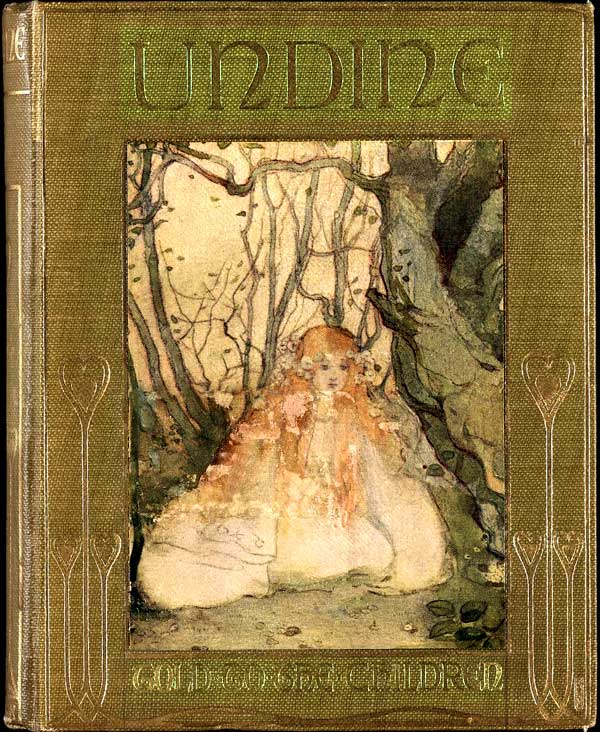
Undine, a fairy tale by Friedrich de la Motte Fouquée has inspired several films including Neil Jordan's, a number of operas including Tchaikovsky's and at least three ballets of which the most famous is probably Sir Frederick Ashton's. Ashton created the ballet for Dame Margot Fonteyn.to a score by Hans Werner Henze in 1958. It is a major three act work and was one of the Royal Ballet's staples in its golden age.  No wonder the choreographer David Nixon felt "intimidated by the history of Ashton's interpretation and the beautiful and challenging score of Henze" when asked to stage the work for Ballet du Rhin  and Northern Ballet.

I drove to the West Yorkshire Playhouse yesterday with considerable apprehension last night because I have seen Fonteyn dance and admire greatly Ashton's work. As I have said in "Ballet and Intellectual Property - my Excuse for reviewing 'Beauty and the Beast'" 31 Dec 2011 and "Cracking Nuts - Copyright in Choreography" IP North West 24 Nov 2011, Northern Ballet is a good company and Nixon is a good choreographer but could they really carry this off?   Well as a matter of fact they have - and spectacularly.   In my humble opinion this is Nixon's best work yet.  Indeed, it is probably Northern Ballet's best work to date.

Though he has kept Henze's score Nixon's Ondine is very different from Ashton's.  Instead of a sprite appearing in a waterfall, Nixon's story begins with a child on a beach teasing a fisherman by stepping in his nets. That child is Ondine and her appearance in the prologue sets the theme for the rest of the ballet.  Last night that role was performed delightfully by Caitlin Noonan of the Northern Ballet Academy.   The grown up Ondine (Martha Leebold), falls in love not with Palemon but with a knight called Brand (Tobias Batley). They marry to the distress of Beatrice, (not Berta) danced by Dreda Blow.  A sort of Giselle in reverse but instead of tragedy Ondine takes pity on Beatrice and allows her to live with her and her husband. The ménage à trois turns out not to be a good idea and Beatrice and Brand decide to take a boat trip.  Brand's eyes wander towards Beatrice, a storm erupts and Ondine jumps overboard. Thinking that Ondine is dead Brand and Beatrice decide to marry but just as they do another storm breaks out and the sprite Ondine reappears from the sea to reclaim her husband.

The ballet creates very powerful roles not only for the three principals, Leabolod, Batley and Blow but also for Sebastian Low who danced the priest and Kevin Poeung and Hironao Takahashi and indeed several soloists and coryphees in a spectacular wedding divertissement in the third act. All were good and it is perhaps unfair to name names but my eye was caught by Matthew Broadbent.   I am sure the public will see a lot of him in the next few years.

The final ingredient of the success of the work was Jerome Kaplan's set and costumes working skilfully projected with the lighting team. Surf, for example, was represented by the hems of the girls' skirts as they entered silently onto the stage in the prologue and left silently at the end. The waves and eddies of the sea by ingenious photography or lighting that suggested photography.

All very well but this is supposed to be an intellectual property blog not an arts paper I hear my readers say. Well so it is and here is my IP lesson. Before the show an announcer warned the audience not to take any photos or movies with phones or cameras. Why? Because this ballet was a performance falling within Part II of the Copyright Designs and Patents Act 1988 and performers rights are infringed by any fixation (that is to say recording) without their consent.  Bootlegging - filming and taping on an industrial scale - is actually an offence under the Act as well as an infringement of the  dancers' economic and moral rights.

Northern Ballet's Ondine is at the Quarry Theatre in the West Yorkshire Playhouse until tomorrow.

12 September 2012

Leeds City Region Growing Places Fund: £26 million Loan Fund


Earlier today a conference and exhibition took place at Bradford University to launch Base Leeds City Region. I was unable to attend the event so I have to rely on the event website which states that it would  "promote the City Region as a low carbon location and highlight opportunities arising from initiatives that are under way." I noticed that there had been similar events in London and Glasgow that had involved many of the great and the good of our country. All very worthy stuff.

Looking through the programme the item that caught my eye was an announcement by Neil McLean (Chair of Leeds City Region LEP) of a £26 million fund  for projects that are ready, but have been delayed and now need support to proceed.  This is known as the "Growing Places Fund" and appears to be open to all businesses and organizations of any size based in or looking to invest in the Leeds City Region. The fund will provide loans of between £250,000 and £5 million for capital investment in infrastructure such as expansion of business premises or the development of new road junctions.  Full details of the scheme are set out in the prospectus. Expressions of interest have to be communicated on a form that can be downloaded from the LEP's website by 1 Nov 2012.

There is also an interesting article on the Growing Places Fund and the Base Leeds City event by Ian Briggs on the Business Desk Website ("Growing Places Fund offers development opportunities" 11 Sep 2012).

29 August 2012

Yorkshire LEPs One Year After the Armouries

James Reed's article "LEPs unite to back energy hub bid" in today's Business Desk prompts a review of the county's local enterprise partnerships one year on from the very successful Local Enterprise Partnership Summit at the Royal Armouries in Leeds on 9 Sep 2011 (see my post "LEP Summit: My Impressions of the Day as a Delegate" 10 Sep 2011). The Summit welcomed representatives from other Northern LEPs and the question of regional co-operation was touched upon although they were more than counterbalanced by inter-regional rivalries.

Reed's article mentions an example of practical regional co-operation.  The four LEP's have joined forces to back 2CO Energy and and the White Rose CCS Project that could make Yorkshire a centre for green energy production. According to Reed, the LEPs are urging the Government to help fund those projects t as a first step to creating a 'cluster' of expertise in carbon capture and storage technology.  Reid continues:
"The demise of regional development agency Yorkshire Forward and the creation of local enterprise partnerships raised concerns that the new bodies would become preoccupied with local concerns and not act together.
That idea has always been rejected by the LEP chairmen and their united support for the region's pioneering CCS projects is the most high profile example of collaboration between the four bodies to date."
Yorkshire and the Humber now have four local enterprise partnerships and three of them have their own websites:

 If anyone wants to discuss this topic with me further, he or she can contact me through my contact form, Facebook, Linkedin, Xing or twitter or call me on 0113 320 3232 .